A clear guide to one of the most important and widely used mechanics in modern slot design.
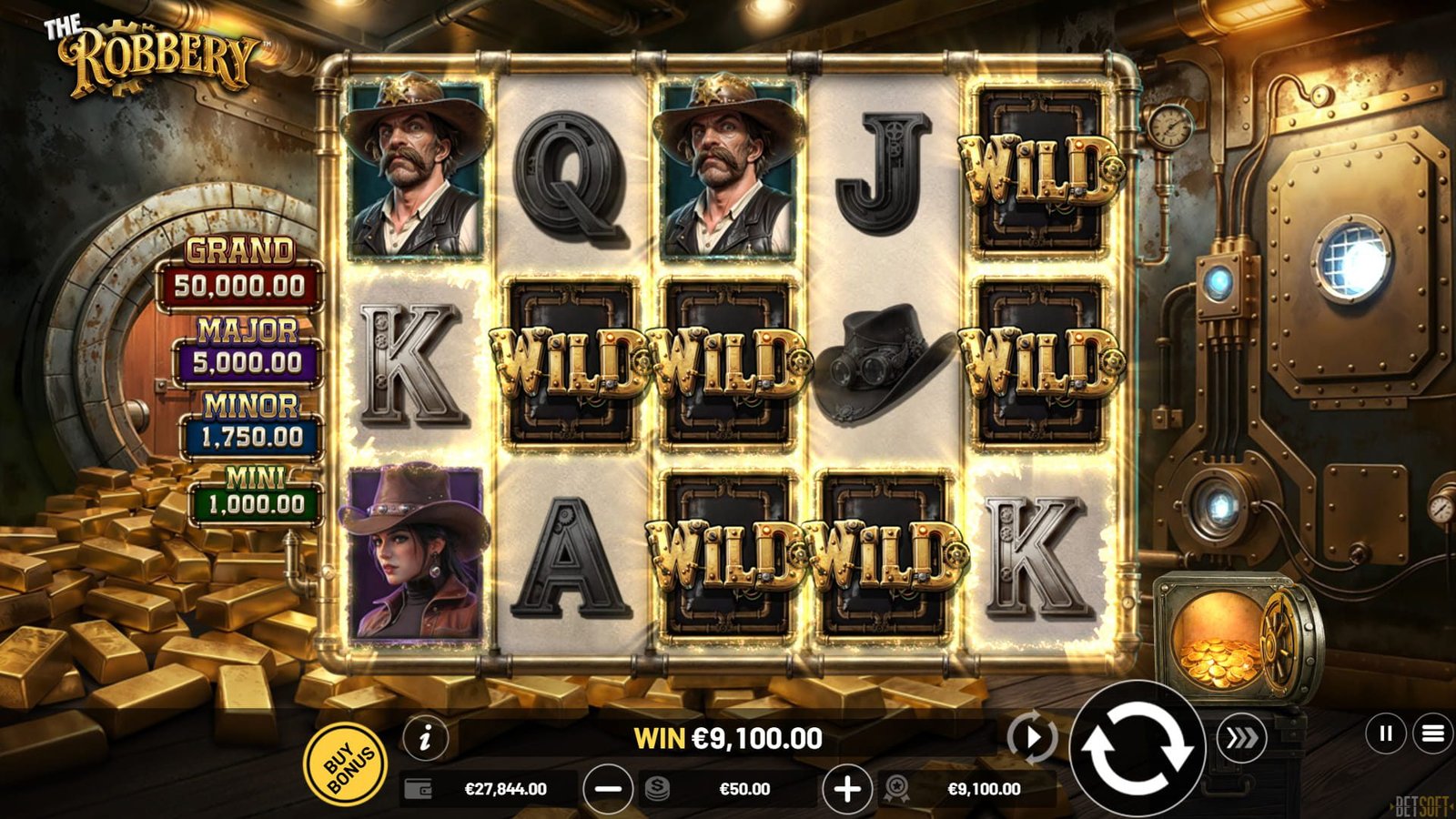
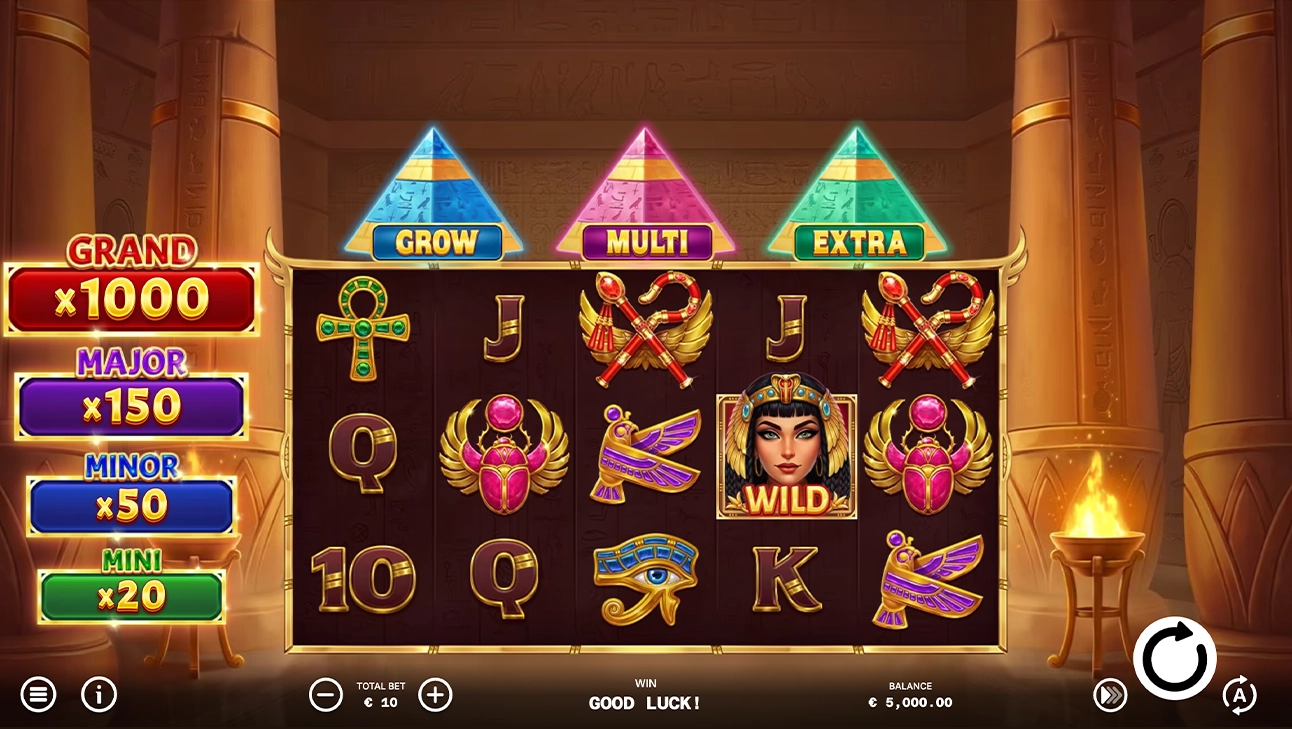
If you have played modern slot games, you have probably seen a symbol marked WILD appear on the reels. It may look like an ordinary symbol, but its role is very different.
A Wild is essentially a substitute symbol. It can stand in for eligible regular symbols to help create winning combinations. This simple idea has become one of the foundations of modern slot design, with developers building increasingly sophisticated mechanics around it. Wilds are not all the same, they can expand, move, multiply, remain locked, appear in groups, or interact with other symbols.
Let's break down exactly how they work.
What Is a Wild Symbol?
A Wild symbol is a special slot symbol that can substitute for one or more regular paying symbols. Think of it like a Joker in a deck of cards.
For example, if a winning combination requires three matching Cherry symbols and the result is Cherry, WILD, Cherry, the Wild can substitute for the missing Cherry, allowing the combination to qualify, provided the game's rules allow that substitution.
That's the fundamental purpose of a Wild, but the exact symbols it can replace depend entirely on the individual game. In many games, Wilds substitute for regular paying symbols but not for Scatters or Bonus symbols; some Wilds are restricted to only high-value or only low-value symbols. This behaviour is always game-specific, so the paytable or information panel is the only reliable source, never assume how a given Wild works.
How Does a Wild Work?
The easiest way to understand a Wild is to look at its role within a winning combination. Suppose a game needs a matching symbol to appear on consecutive reels, and the result is A, A, WILD, A, A. If the Wild is eligible to substitute for that symbol, it completes the combination.
The Wild doesn't necessarily create a separate win by itself, it helps an existing combination qualify. This is why Wilds are such an important part of slot mathematics: their frequency, position, substitution rules, and additional features are all built into the game's mathematical model.
The Different Types of Wilds
The basic Wild is only the starting point. Modern developers have created many variations that change how it behaves.
- Standard Wild — The simplest version. It appears on the reels and substitutes for eligible symbols during that spin, normally occupying a single position and not carrying over to future spins. Despite its simplicity, it's the foundation every other Wild variation builds on.
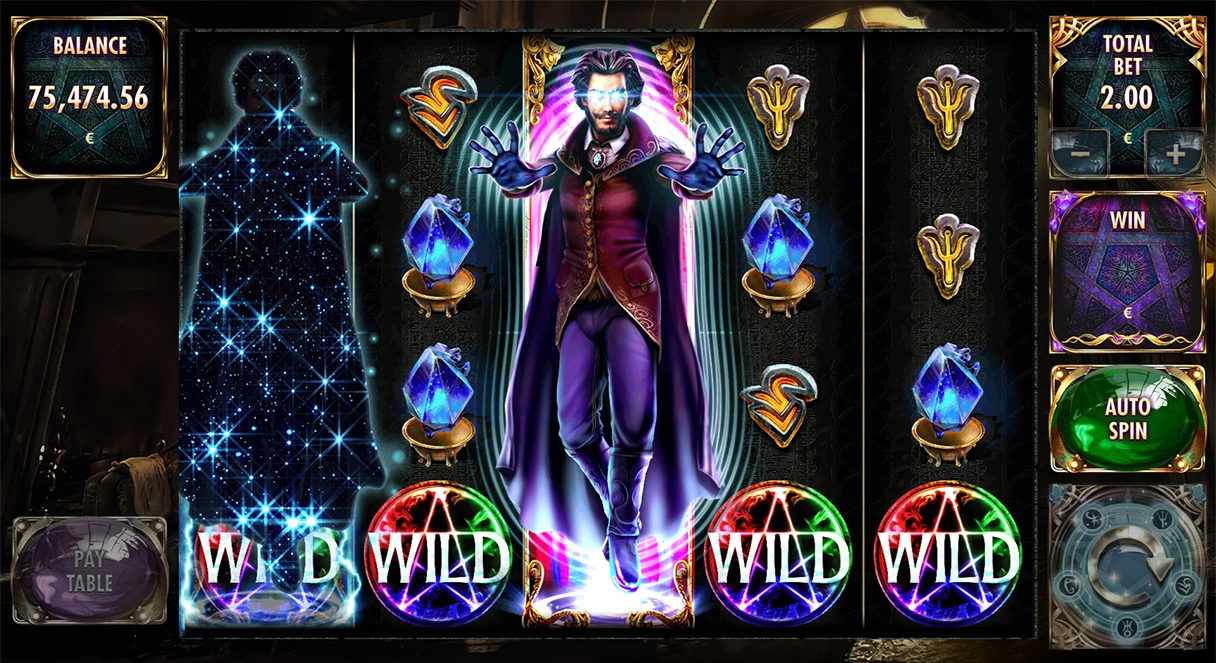
- Expanding Wild — Starts as a Wild symbol and then expands to cover additional reel positions, commonly expanding vertically to cover an entire reel. Because a single Wild can occupy multiple positions at once, this creates additional opportunities for winning combinations. Exact expansion rules vary between games.
- Sticky Wild — Remains in its position for multiple spins instead of disappearing after the current one, particularly common in Free Spins or bonus rounds. If additional Wilds also become Sticky, they can accumulate on the grid, creating a progressively different reel layout, which makes this mechanic especially useful for building a sense of progression across a feature.
- Walking or Moving Wild — Also called a Shifting Wild, it changes position across the reels from spin to spin (for example, moving one reel to the left each time), with the exact direction and rules depending on the game. Walking Wilds are often combined with respins, and from an animation perspective, they give the Wild character or symbol a reason to physically move across the screen.
- Stacked Wild — Occupies multiple positions on the same reel, appearing as a vertical stack of Wild symbols rather than a single one. This is particularly useful in games with traditional paylines or ways-based systems, since multiple Wild positions on one reel can all participate in winning combinations.
- Multiplier Wild — Combines substitution with a multiplier (2x, 3x, 5x, 10x, or other values), applying that multiplier to any win it contributes to. When multiple Multiplier Wilds land on the same win, some games add the values together and others multiply them, the specific game's rules always take priority.
- Giant or Colossal Wild — Occupies multiple positions simultaneously, a 2×2 or 3×3 area of the grid isn't unusual, creating a much larger Wild presence that can interact with several winning combinations at once. These also give artists and animators considerably more room for dramatic visual moments.
- Random Wild — Appears in selected positions according to the game's rules rather than being tied to one fixed spot, sometimes with multiple Random Wilds appearing during a single feature to create a different reel configuration each spin.
- Transforming or Duplicating Wild — A more active category where a Wild can transform nearby symbols into Wilds, duplicate itself, spread across the grid, or transfer to another position. These mechanics show how far the Wild concept has moved from a simple substitute into an active gameplay system in its own right.
Wilds and Free Spins
Wilds become particularly interesting when they interact with Free Spins. A game might use standard Wilds in the base game, but shift to Sticky Wilds during Free Spins, and add multipliers to those Sticky Wilds in an Enhanced Free Spins tier. The player isn't just getting more spins in that scenario, the rules around the Wild itself are changing, creating a genuinely different gameplay experience state to state.
Wilds and Cascading Games
Wilds can also interact with Cascading or Tumbling mechanics. When a winning combination is removed, new symbols fall into the empty positions, if a Wild remains on the grid or a new one appears during the cascade, it can participate in the next winning combination too, creating an evolving reel state where one win can lead directly into another. What Are Megaways?
Wilds and Different Ways to Win
The impact of a Wild also depends on the game's winning system. In Paylines games, a Wild substitutes within an active line. In Ways to Win games, it can contribute to matching symbols across adjacent reels. In Cluster Pays, it can help create or extend a qualifying group. In grid-based games, it interacts with positions or areas of the board rather than lines at all. The same underlying Wild concept behaves quite differently depending on which of these structures it sits inside.
RTP and Volatility: What Wilds Actually Determine
A Wild does not automatically mean a higher RTP, and there's no universal volatility level tied to any particular Wild type. A Wild's probability of appearing, its substitution behaviour, its payout contribution, and any attached features are all part of the game's complete mathematical model, and that full model, not the presence of a Wild on its own, is what determines RTP and volatility.
That said, Wild mechanics do shape how rewards get distributed: a frequent, simple Wild tends to support regular smaller wins, while a rare Multiplier or Sticky Wild concentrates more value into specific features or game states. This is one reason Wild design and slot mathematics are so closely linked, but the specific numbers always come from the individual game's configuration, never assume based on Wild type alone. Understanding Slot Volatility
How to Read a Wild in Any Slot Game
When you open a new slot, the game's information panel should answer:
- What does the Wild substitute for? Check which symbols it can replace.
- Does it have its own payout? Some games assign Wild combinations a direct value.
- Does it remain on the reels? This tells you if it's Sticky or part of another persistent mechanic.
- Does it expand or move? Look for Expanding or Walking/Shifting Wild rules.
- Does it carry a multiplier? Check the value and how multiple multipliers interact.
- Does its behaviour change during Free Spins? Many games introduce enhanced Wild mechanics in bonus rounds.
These six questions will tell you more about how a game actually plays than the theme or artwork ever will.
Final Thoughts
The original idea behind a Wild is simple: a symbol that can stand in for another. Modern developers have turned that into a genuinely broad design language, a Wild can expand, lock in place, move, multiply, transform other symbols, cover a large grid area, or interact with an entire bonus system, and it touches game design, mathematics, art, animation, sound, and UX all at once to do it.
At their simplest, Wilds help complete a winning combination. At their most advanced, they become a central character in a game's entire structure. The next time one lands on the reels, it's worth looking past the symbol itself: what does it substitute for, how long does it stay, does it move or expand, and how does it interact with everything else on the board. That's the actual mechanic doing the work, not just a symbol.
Discover More with iGamity
At iGamity, we explore the mechanics, creativity, art, animation, sound, and production thinking behind modern iGaming.
Through Game Reviews, Studio Spotlights, iGamity Talks, and educational articles, we highlight the ideas shaping the next generation of gaming experiences.
4. Belatra Article
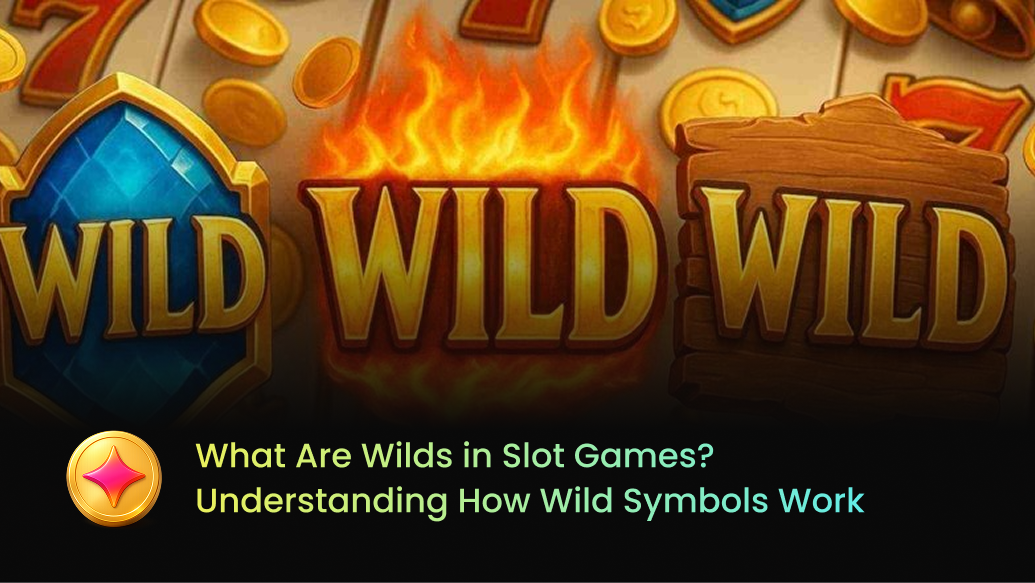
What Are Wilds in Slot Games? Understanding How Wild Symbols Work
A clear guide to one of the most important and widely used mechanics in modern slot design.
If you have played modern slot games, you have probably seen a symbol marked WILD appear on the reels. It may look like an ordinary symbol, but its role is very different.
A Wild is essentially a substitute symbol. It can stand in for eligible regular symbols to help create winning combinations. This simple idea has become one of the foundations of modern slot design, with developers building increasingly sophisticated mechanics around it. Wilds are not all the same, they can expand, move, multiply, remain locked, appear in groups, or interact with other symbols.
Let's break down exactly how they work.
What Is a Wild Symbol?
A Wild symbol is a special slot symbol that can substitute for one or more regular paying symbols. Think of it like a Joker in a deck of cards.
For example, if a winning combination requires three matching Cherry symbols and the result is Cherry, WILD, Cherry, the Wild can substitute for the missing Cherry, allowing the combination to qualify, provided the game's rules allow that substitution.
That's the fundamental purpose of a Wild, but the exact symbols it can replace depend entirely on the individual game. In many games, Wilds substitute for regular paying symbols but not for Scatters or Bonus symbols; some Wilds are restricted to only high-value or only low-value symbols. This behaviour is always game-specific, so the paytable or information panel is the only reliable source, never assume how a given Wild works.
How Does a Wild Work?
The easiest way to understand a Wild is to look at its role within a winning combination. Suppose a game needs a matching symbol to appear on consecutive reels, and the result is A, A, WILD, A, A. If the Wild is eligible to substitute for that symbol, it completes the combination.
The Wild doesn't necessarily create a separate win by itself, it helps an existing combination qualify. This is why Wilds are such an important part of slot mathematics: their frequency, position, substitution rules, and additional features are all built into the game's mathematical model.
The Different Types of Wilds
The basic Wild is only the starting point. Modern developers have created many variations that change how it behaves.
- Standard Wild —> The simplest version. It appears on the reels and substitutes for eligible symbols during that spin, normally occupying a single position and not carrying over to future spins. Despite its simplicity, it's the foundation every other Wild variation builds on.
- Expanding Wild —> Starts as a Wild symbol and then expands to cover additional reel positions, commonly expanding vertically to cover an entire reel. Because a single Wild can occupy multiple positions at once, this creates additional opportunities for winning combinations. Exact expansion rules vary between games.
- Sticky Wild —> Remains in its position for multiple spins instead of disappearing after the current one, particularly common in Free Spins or bonus rounds. If additional Wilds also become Sticky, they can accumulate on the grid, creating a progressively different reel layout, which makes this mechanic especially useful for building a sense of progression across a feature.
- Walking or Moving Wild —> >Also called a Shifting Wild, it changes position across the reels from spin to spin (for example, moving one reel to the left each time), with the exact direction and rules depending on the game. Walking Wilds are often combined with respins, and from an animation perspective, they give the Wild character or symbol a reason to physically move across the screen.
- Stacked Wild —> Occupies multiple positions on the same reel, appearing as a vertical stack of Wild symbols rather than a single one. This is particularly useful in games with traditional paylines or ways-based systems, since multiple Wild positions on one reel can all participate in winning combinations.
- Multiplier Wild —> Combines substitution with a multiplier (2x, 3x, 5x, 10x, or other values), applying that multiplier to any win it contributes to. When multiple Multiplier Wilds land on the same win, some games add the values together and others multiply them, the specific game's rules always take priority.
- Giant or Colossal Wild —> Occupies multiple positions simultaneously, a 2×2 or 3×3 area of the grid isn't unusual, creating a much larger Wild presence that can interact with several winning combinations at once. These also give artists and animators considerably more room for dramatic visual moments.
- Random Wild —> Appears in selected positions according to the game's rules rather than being tied to one fixed spot, sometimes with multiple Random Wilds appearing during a single feature to create a different reel configuration each spin.
- Transforming or Duplicating Wild — A more active category where a Wild can transform nearby symbols into Wilds, duplicate itself, spread across the grid, or transfer to another position. These mechanics show how far the Wild concept has moved from a simple substitute into an active gameplay system in its own right.
Wilds and Free Spins
Wilds become particularly interesting when they interact with Free Spins. A game might use standard Wilds in the base game, but shift to Sticky Wilds during Free Spins, and add multipliers to those Sticky Wilds in an Enhanced Free Spins tier. The player isn't just getting more spins in that scenario, the rules around the Wild itself are changing, creating a genuinely different gameplay experience state to state.
Wilds and Cascading Games
Wilds can also interact with Cascading or Tumbling mechanics. When a winning combination is removed, new symbols fall into the empty positions, if a Wild remains on the grid or a new one appears during the cascade, it can participate in the next winning combination too, creating an evolving reel state where one win can lead directly into another. What Are Megaways?
Wilds and Different Ways to Win
The impact of a Wild also depends on the game's winning system. In Paylines games, a Wild substitutes within an active line. In Ways to Win games, it can contribute to matching symbols across adjacent reels. In Cluster Pays, it can help create or extend a qualifying group. In grid-based games, it interacts with positions or areas of the board rather than lines at all. The same underlying Wild concept behaves quite differently depending on which of these structures it sits inside.
RTP and Volatility: What Wilds Actually Determine
A Wild does not automatically mean a higher RTP, and there's no universal volatility level tied to any particular Wild type. A Wild's probability of appearing, its substitution behaviour, its payout contribution, and any attached features are all part of the game's complete mathematical model, and that full model, not the presence of a Wild on its own, is what determines RTP and volatility.
That said, Wild mechanics do shape how rewards get distributed: a frequent, simple Wild tends to support regular smaller wins, while a rare Multiplier or Sticky Wild concentrates more value into specific features or game states. This is one reason Wild design and slot mathematics are so closely linked, but the specific numbers always come from the individual game's configuration, never assume based on Wild type alone. Understanding Slot Volatility
How to Read a Wild in Any Slot Game
When you open a new slot, the game's information panel should answer:
- What does the Wild substitute for? Check which symbols it can replace.
- Does it have its own payout? Some games assign Wild combinations a direct value.
- Does it remain on the reels? This tells you if it's Sticky or part of another persistent mechanic.
- Does it expand or move? Look for Expanding or Walking/Shifting Wild rules.
- Does it carry a multiplier? Check the value and how multiple multipliers interact.
- Does its behaviour change during Free Spins? Many games introduce enhanced Wild mechanics in bonus rounds.
These six questions will tell you more about how a game actually plays than the theme or artwork ever will.
Final Thoughts
The original idea behind a Wild is simple: a symbol that can stand in for another. Modern developers have turned that into a genuinely broad design language, a Wild can expand, lock in place, move, multiply, transform other symbols, cover a large grid area, or interact with an entire bonus system, and it touches game design, mathematics, art, animation, sound, and UX all at once to do it.
At their simplest, Wilds help complete a winning combination. At their most advanced, they become a central character in a game's entire structure. The next time one lands on the reels, it's worth looking past the symbol itself: what does it substitute for, how long does it stay, does it move or expand, and how does it interact with everything else on the board. That's the actual mechanic doing the work, not just a symbol.
Discover More with iGamity
At iGamity, we explore the mechanics, creativity, art, animation, sound, and production thinking behind modern iGaming.
Through Game Reviews, Studio Spotlights, iGamity Talks, and educational articles, we highlight the ideas shaping the next generation of gaming experiences.