Cluster Pays slots use a different win structure from traditional payline slots. Instead of requiring matching symbols to land along predefined paylines, they create wins when groups of matching symbols connect on a grid.
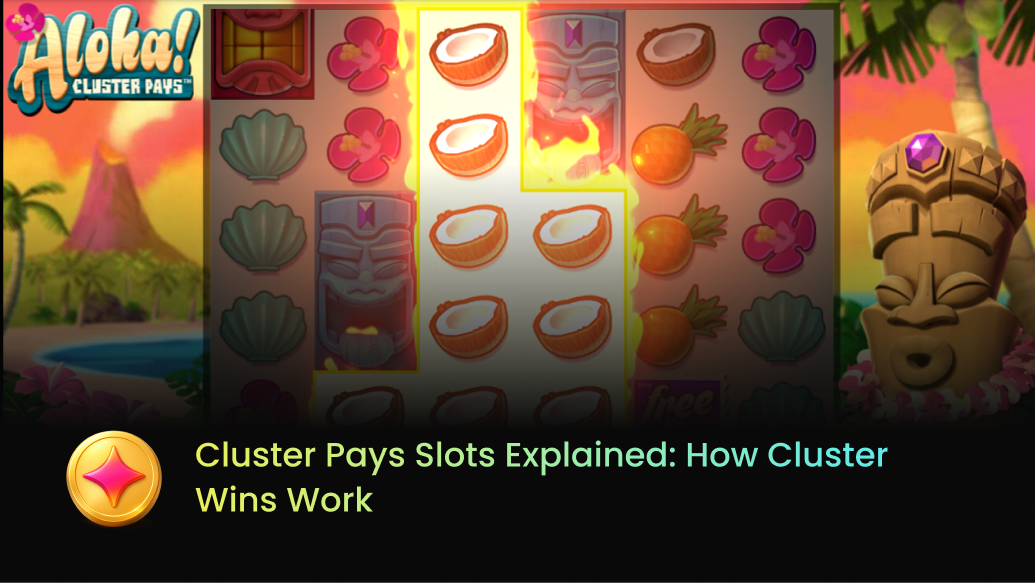
This cluster pays slot mechanic is often combined with cascading wins or tumbling mechanics, allowing winning symbols to disappear and new symbols to enter the grid. If another qualifying cluster forms, another win can follow within the same spin.
WHAT IS A CLUSTER PAYS SLOT?
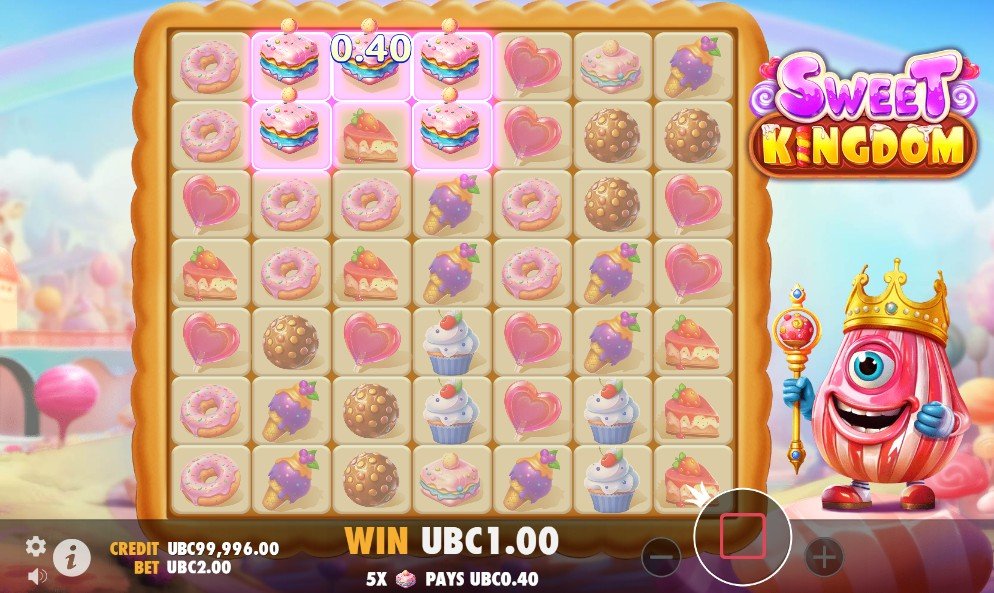
A cluster pays slot awards wins based on groups of matching symbols connected on the game's grid.
The symbols usually need to connect horizontally or vertically, although the exact connection rules and minimum number of symbols vary between games. Diagonal connections generally do not count unless the game's rules specifically allow them.
🍓 🍓 🍇
🍓 🍓 🍊
🍊 🍇 🍇
If the game requires four matching symbols to form a cluster, the four connected strawberries could create a winning combination.
Unlike a traditional payline, the cluster does not need to start from a particular position on the reels. The connected group itself determines whether a win is created.
HOW DO CLUSTER WINS WORK?
The process starts when the game fills the grid with symbols.
The game then checks for groups that meet its cluster win requirements. When a qualifying group is found, the game awards a payout based on the symbol and the rules in its paytable.
The minimum cluster size can vary. Some games may require a small group of matching symbols, while others use larger configurations.
This means the key thing to look for is not a fixed payline but the number and arrangement of connected symbols.
CLUSTER PAYS VS TRADITIONAL PAYLINES
The main difference between these two slot game mechanics is how the game identifies a winning combination.
Traditional slots use predefined paylines or another fixed win structure. Matching symbols generally need to land in specific positions to complete one of those combinations.
Cluster Pays slots instead evaluate connected groups across the grid. A winning cluster can therefore form in different areas of the game screen without following a predetermined line.
This grid-based structure also works particularly well with cascading and tumbling mechanics.
HOW DO CASCADING WINS WORK?
A cascading wins slot removes winning symbols after a qualifying combination is formed and then fills the resulting gaps with new symbols.
The basic sequence is:
Cluster forms → winning symbols disappear → symbols fall → new symbols enter → grid is checked again
If the new arrangement creates another qualifying cluster, the game awards another win and the process repeats.
This can turn one initial cluster into a chain of consecutive wins within a single spin.
CASCADING WINS VS TUMBLING WINS
You may encounter several names for this type of mechanic, including cascading wins, tumbling wins, and avalanche mechanics.
The terminology can vary between studios and individual games, but the underlying process is generally similar. Winning symbols are removed, the remaining symbols move into the available spaces, and new symbols enter before the game checks the grid again.
The important part is what happens after the initial win: the grid changes, creating another opportunity for a winning combination.
WHY ARE CLUSTER PAYS AND CASCADES OFTEN COMBINED?
Cluster Pays and cascading mechanics complement each other because both are based around the changing arrangement of symbols on a grid.
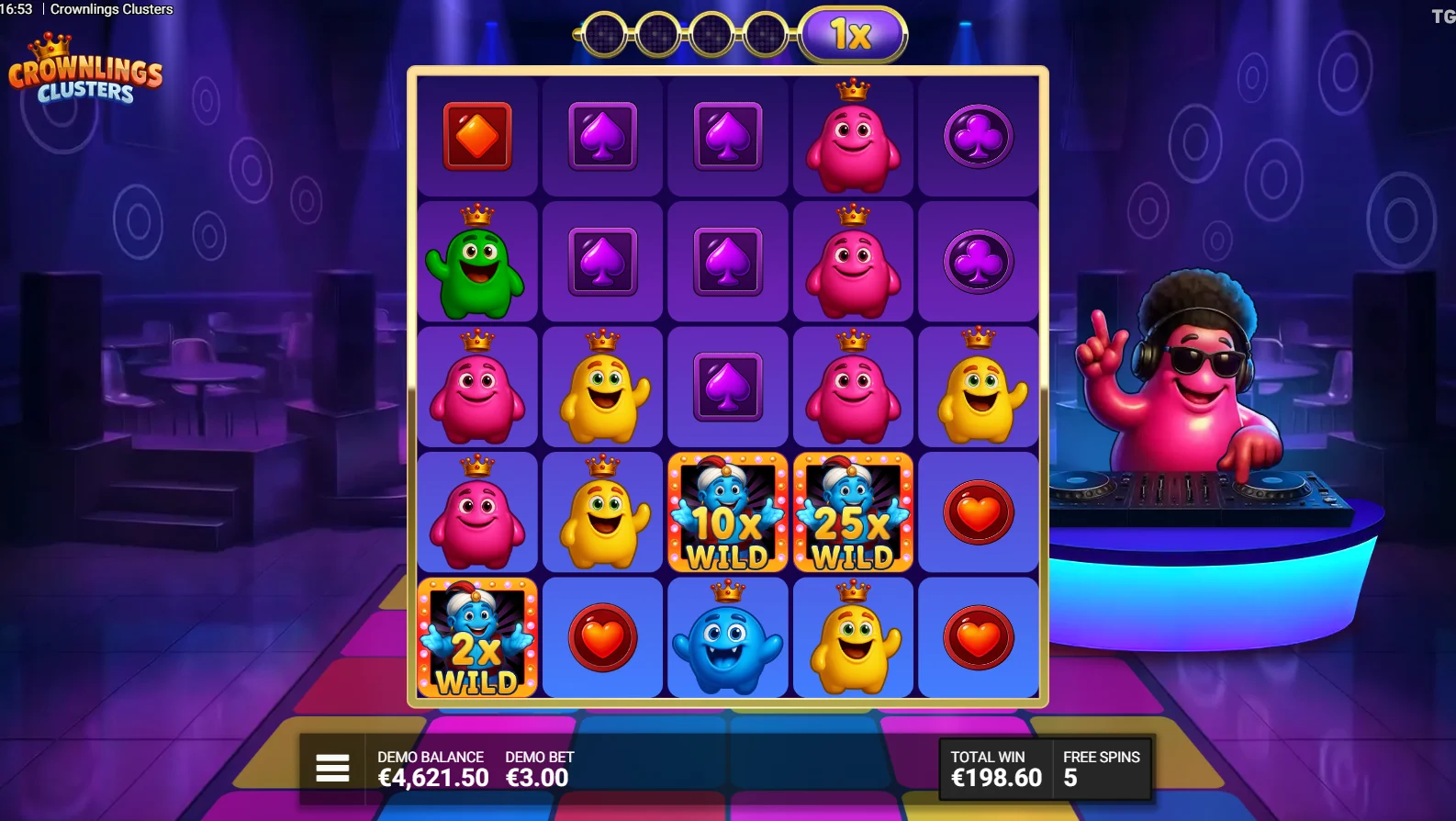
A winning cluster creates empty spaces when its symbols are removed. Other symbols can then move into those spaces, while new symbols enter the grid. This can create entirely new clusters that would not have existed in the original arrangement.
Developers can also build additional features around this structure, including:
- Wild symbols
- Multipliers
- Expanding symbols
- Special symbol meters
- Bonus features
- Feature-specific modifiers
These elements are not standard components of every Cluster Pays game. Their presence and behaviour depend on the individual game's design.
WHAT HAPPENS DURING A LONG CASCADE?
A cascade can end after the first winning combination, or it can continue through multiple stages when each new grid creates another qualifying cluster.
For example:
Initial grid:
A qualifying cluster forms and creates a win.
First cascade:
The winning symbols disappear and other symbols move into their positions.
Second cascade:
The new arrangement creates another cluster.
Third cascade:
Those symbols are removed and the grid changes again.
The process continues until no new qualifying cluster is formed.
Some games introduce multipliers or other modifiers during consecutive cascades, but these features are game-specific.
CLUSTER PAYS AS A SLOT GAME MECHANIC
From a slot game design perspective, Cluster Pays changes how players interact with the game's visual grid.
Instead of following a set of paylines, players see groups of symbols forming and disappearing across the screen. This gives developers flexibility when designing grid configurations, symbol behaviours, cascading systems, and additional game features.
The mechanic also creates a visible connection between one win and the next. When a cluster disappears, the resulting change to the grid directly influences what can happen during the following cascade.
That relationship between cluster formation, symbol removal, and cascading wins is central to the identity of the mechanic.
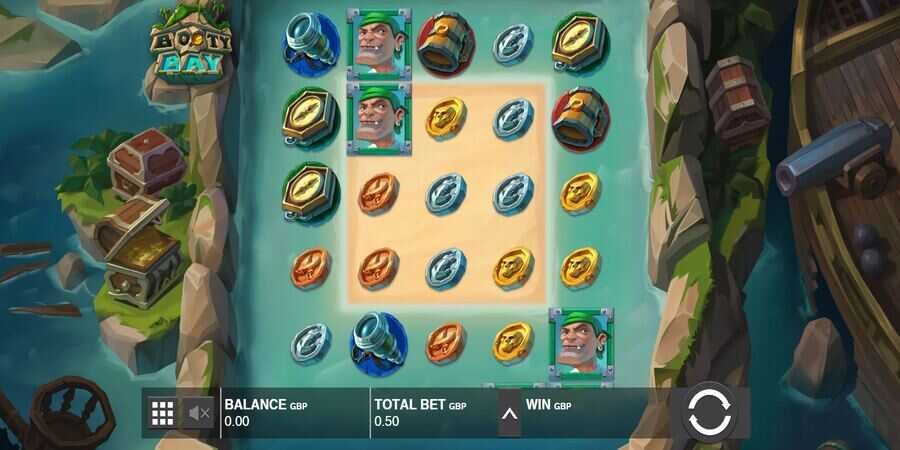
CLUSTER PAYS SLOTS: KEY TAKEAWAYS
Cluster Pays slots replace traditional paylines with groups of connected matching symbols. When a group meets the game's cluster requirements, it creates a win.
In games with cascading or tumbling mechanics, the winning symbols are then removed and the grid is refilled. New clusters can create additional wins, allowing a single spin to produce a sequence of combinations.
The exact rules depend on the game, including:
- Minimum cluster size
- Connection requirements
- Grid configuration
- Symbol payouts
- Cascade or tumble behaviour
- Multipliers and additional features
This flexibility makes Cluster Pays a useful mechanic for modern slot game design, particularly when combined with changing grids and cascading win systems.
ABOUT IGAMITY
At iGamity, we explore the innovation, technology, product strategies, and market trends shaping the future of iGaming.
Through Game Reviews, Studio Spotlights, iGamity Talks, Written Talks, and educational articles, we explore the ideas and strategies shaping today's iGaming experiences.
iGamity. Every Spin Has a Story.